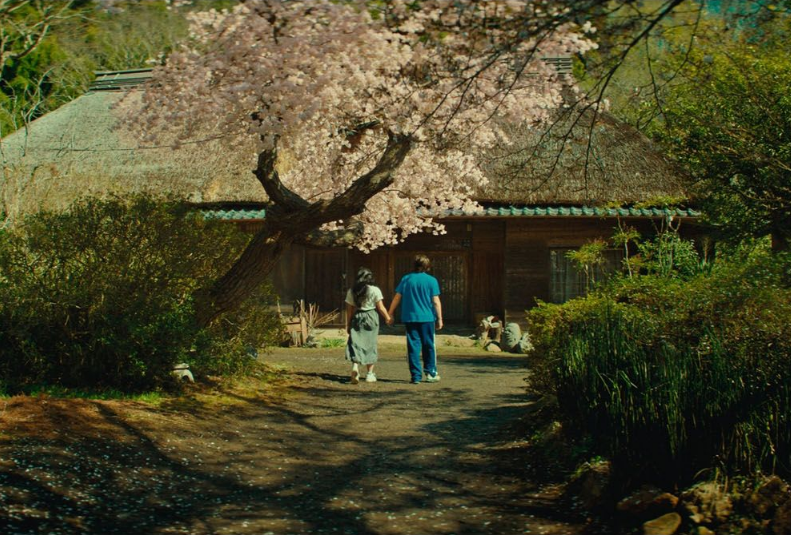
Ecoprod has been speaking with Charles Jaeger, green production coordinator for the feature film Yoroï, directed by David Tomaszewski, co-written by Orelsan and produced by Cinéfrance Studios, that received the Ecoprod 1-star Label.
An green production approach on an international scale
The feature film *Yoroï*, shot in France and Japan, has been awarded the 1-star Ecoprod Label. In your view, what are the environmental challenges of international co-productions?
The main environmental challenge in an international co-production is to minimise the transport of people and equipment (particularly the journeys involved in location scouting, preparation, filming and post-production), as, over such distances, air travel remains the most commonly used mode of transport. A second major challenge lies in ensuring the continuity of the environmental action plan: as each country has its own specific circumstances (transport, accommodation, waste management, rules for filming in natural environments, etc.), it is necessary to adapt to these local realities in order to maintain a consistent and effective approach.
How was Cinefrance Studios’ strategy defined, and how was it implemented in collaboration with the Japanese production company?
As green production coordinator, I led the project’s sustainability strategy in collaboration with the department heads. I liaised with a production assistant in Japan, who was responsible for monitoring measures on site. Several meetings were held to determine which green production measures could be standardised and which needed to be specific to each country. On site, the Japanese production company was responsible for implementing the green production strategy.
What measures should be taken when filming abroad, in this case here in Japan, to ensure that the production is environmentally responsible?
It is essential to identify a person attached to the executive production team that will coordinate sustainability actions: without a local point of contact, monitoring becomes virtually impossible. Together with my counterpart in Japan, we worked to pool transport resources as effectively as possible and to avoid carbon-intensive transport on site. We also ensured that we prioritised certified accommodation close to the filming locations. Our discussions led to the introduction of concrete measures for catering during filming in Japan: one 100% vegetarian meal per week, a vegetarian option available at every meal, and a limit of one red meat meal per week, as is the case for shoots in France.
How can best practices be maintained within a regulatory framework that differs from that of France?
Certain measures can and must be taken, regardless of the regulatory framework. We are, however, aware that for the local teams, some of these measures may be unusual: we therefore remain open to feedback and adapt our approach to what is actually feasible. Most of the questions I discussed with my contact concerned scenes filmed in natural environments and the restrictions imposed by local regulations. In this context, we requested that certain recommendations from Ecoprod’s ‘Filming in Natural Environments’ Guide be implemented, even though they were not mandatory.
What were the main obstacles to Yoroï’s green production initiative?
One of the challenges involved gathering supporting documents, particularly invoices in Japanese (which needed to be translated for an audit by AFNOR Certification as part of the Ecoprod Label). Entrusting this task to third parties, without being present or monitoring the process on a day-to-day basis, can lead to omissions or inaccuracies. Finally, as each country has its own working practices, regulations and infrastructure, it is essential to allow sufficient time for in-depth analysis to understand how to effectively adapt eco-production to each local context.
Anticipating green production through environmental monitoring
How did the environmental script breakdown carried out prior to filming, help to anticipate the green production strategy?
The environmental script breakdown made it possible to identify high-impact scenes and to base discussions with the various departments on concrete evidence. Concrete measures could thus be proposed to the relevant departments to reduce the impact of certain scenes. At the same time, certain sequences with a significant impact were removed by the screenwriters. The environmental review makes it possible to demonstrate the potential ecological impact of each sequence, to listen to creative intentions and to propose alternatives as early as possible. It thus provides a concrete working basis for discussions with each department.
